

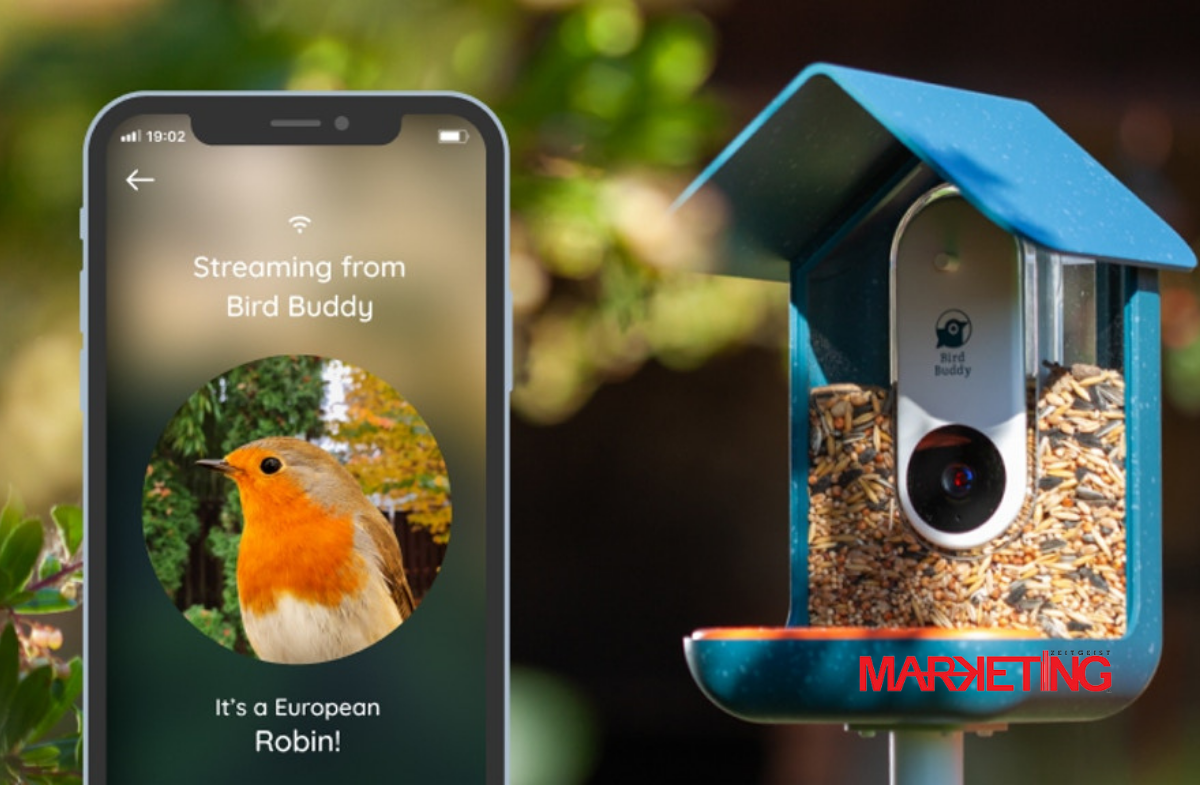
A Slovenian start-up called Bird Buddy had gathered no less than 10 million dollars across different crowdfunding platforms prior to producing even a single birdhouse. On their first night on Kickstarter, the company raised a whopping 500,000 dollars – the highest grossing campaign ever in the gadgets category.
Žiga Vratčič, an experienced digital marketer, used to work for Outfit 7 – the third largest video games producer in Europe. Žiga was working on a game called My Talking Hank, where the player was challenged to gather as many animal photos as possible.
“The game’s success got me thinking about the incredible power of collecting. People love to collect things,” says Žiga.
A few years prior, he had seen a viral YouTube video of a seagull who had stolen a GoPro camera. Consequently, fascinating close-ups of the bird’s life flooded the internet.

“Soon a picture started to form: birds, photos, collecting and gamification. I came up with a smart birdhouse, where each bird would be photographed, the AI then identifies the species and sends pictures to the net. The owner can share those pictures via a dedicated app and compete with other bird lovers,” describes Žiga, who teamed up with fellow tech-enthusiast Franci Zidar to develop and market the idea. Bird Buddy was born.
According to recent studies 7 out of 10 people have lost touch with nature. Feeding is a natural way to regain that control. Instead of forcing people to develop new habits, Bird Buddy used this insight to reinforce and elevate an old tradition. It used to be that we leave food in the birdhouse, leave for work and once back, the food has been eaten and no birds are nowhere to be seen.
With Bird Buddy, you have full real-time access to the birdhouse plus an additional bonus in the form of gamification. Žiga compares it with Pokemon Go, “We’ve borrowed a lot from various games. Birdhouse owners can compete by collecting pictures, counting visits and species.”

Photographing birds is exceptionally hard. You need expensive equipment, a whole lot of patience and free time on your hands.
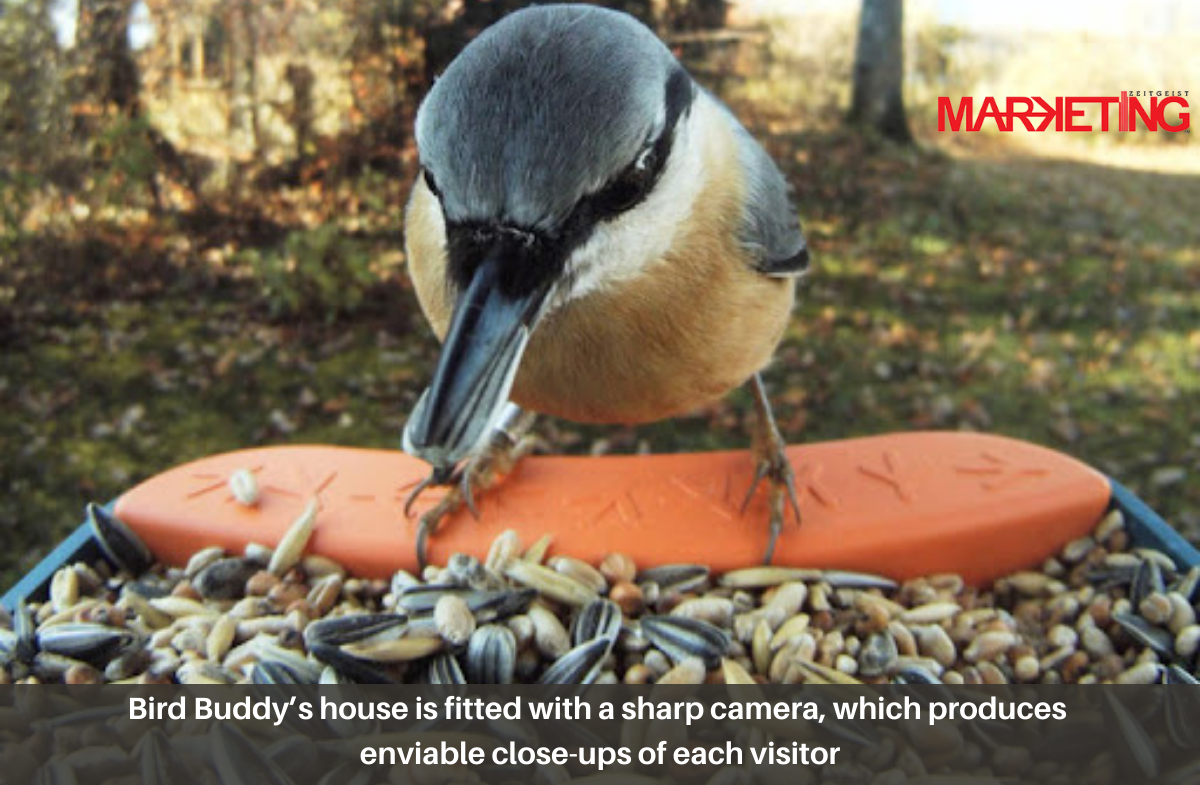
Bird Buddy’s house is fitted with a sharp camera, which produces enviable close-ups of each visitor. Animal photos are the superstars of the internet, hence there was plenty of substance behind the idea.
However, the idea is not new per se, others have already tried to fit birdhouses with cameras, but the user experience was lacking. Bird Buddy is revolutionary due to its advanced AI, saving people from tedious components like SD cards etc.
Žiga and Franci have both extensive experience in digital marketing. They joke that it took them 15 years to gather knowledge and come up with a viable product.
Bird Buddy turned to crowdfunding platforms for both funding and necessary feedback. By contacting numerous Kickstarter projects, the team learned valuable lessons about the do’s and don’ts behind a successful campaign.
They realised that besides having a quirky product, there needs to be prior buzz around the project and the campaign needs to have an impressive start from the get-go because a slow start signifies a higher risk for potential funders.
An explosive start it was!
Bird Buddy’s Kickstarter campaign gathered 4 million dollars, becoming the most successful project in the gadgets category. “We did another round on Indiegogo and launched pre-sales on our website. This brought us to 10 million dollars and 50,000 pre-orders,” remembers Žiga.
Growth marketing is marketing 2.0. It takes the traditional marketing model and adds layers such as A/B testing, value-additive blog posts, data-driven email marketing campaigns, SEO optimization, creative ad copy, and technical analysis of every aspect of a user’s experience. The insights gained from these strategies are quickly implemented in order to achieve robust and sustainable growth.
One common practice in growth marketing is to experiment: to build a prototype and advertise this non-existing product. By doing so, it is possible to collect customer feedback and predict the success of the product. In extreme cases – when there is very little interest in the prototype, it may be canceled at all.
This approach saves the costs of developing the actual product before it goes to market.
Prior to crowdfunding of Bird Buddy, a custom website was created for a non-existing product and marketed through paid Facebook ads. The aim was to collect leads, more specifically the emails of potential buyers.
Žiga knew that for a budget of roughly 500€ they should collect around 165-500 emails. The result was 1600 emails – a great indicator of high interest in the product. He advises others to experiment in a similar fashion.
Kickstarter is a superb platform not just for collecting funds, but also valuable feedback. They received thousands of questions and recommendations. This data was then systematically catalogued, analysed and implemented in the final product.
Bird Buddy’s growth marketing lessons:
The future looks bright for Bird Buddy. Combined, around 100 million people feed birds in the US and Europe. Our protagonists aim to grab 10% of that market, which amounts to nearly 1,5 billion euros.
Click here for details and registration


